Stop Chasing Unpredictable Traffic.
Finding Your Tribe
Build the Loyal Core That Stabilizes Your Restaurant
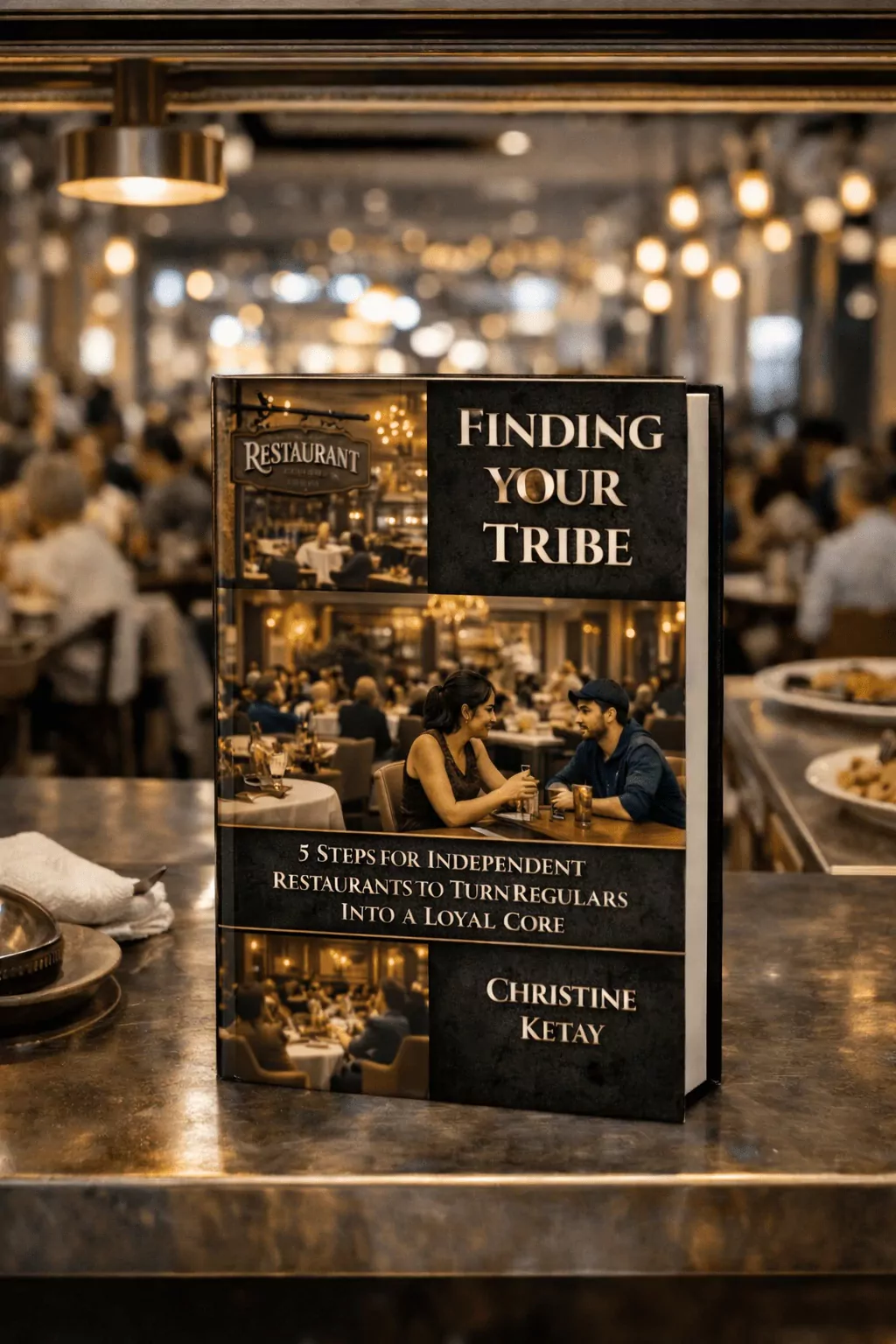
Finding Your Tribe is a practical, relationship-driven framework for independent restaurant owners who want to increase repeat visits, stabilize revenue, and create a dependable base of guests who choose them week after week.
The Real Problem Most Independent Restaurants Face
Most independent restaurants don’t struggle because of food quality. They don’t struggle because of service standards. They struggle because their revenue feels unpredictable.
One week feels full and hopeful. The next feels quiet and uncertain. And when your dining room depends heavily on new traffic, every slow night feels personal. It creates emotional weight that goes far beyond numbers on a report.
So operators respond the only way they’ve been taught. They try promotions. They experiment with marketing. They tweak menus. They post more frequently. They chase visibility. But visibility creates spikes. And spikes are not stability.
Traffic is temporary.
Loyalty is stabilizing.
The restaurants that feel steady — even during seasonal swings — are not necessarily louder or more aggressive in their marketing. They have something else. They have a loyal core of guests who return naturally, bring others with them, and speak about the restaurant as part of their routine.
That kind of loyalty isn’t accidental. It’s cultivated. And once you understand how it forms, you can begin building it intentionally.
That’s why Finding Your Tribe exists.
What Changes When Your Restaurant Has a Loyal Core
When you build a true loyal base, your restaurant begins to feel different from the inside out.
You walk into a shift knowing certain guests will likely be there. Your team starts recognizing faces. Conversations become easier. The room carries familiarity instead of constant uncertainty.
Revenue becomes steadier — not because every night is packed, but because fewer nights feel fragile. You’re no longer starting from zero each week. There’s continuity.
You begin to rely less on discounts and promotions because your core guests return without needing to be persuaded. They bring friends. They celebrate milestones in your space. They choose you.
And perhaps most importantly, the emotional pressure decreases. You stop chasing everyone and start caring intentionally for the people who already want to belong.
That shift changes everything.
Finding Your Tribe shows you how to create that shift step by step.
What You Get Inside Finding Your Tribe
Imagine Walking Into Your Restaurant and Recognizing Most of the Room
Not because of reservations.
Not because of promotions.
But because they come back week after week.
That’s what a loyal core looks like.
That’s what stability feels like.
And it’s something you can build intentionally.
Finding Your Tribe is not a marketing playbook filled with campaigns and gimmicks. It’s not a loyalty app. It’s not a promotional calendar.
It’s a relational framework built specifically for independent restaurants — operators who are already stretched thin and don’t have time for complicated systems.
Each step fits into real service. Nothing new to install. Nothing to automate. Nothing to manage. Instead of asking you to do more, this framework asks you to see differently. Here's how Finding Your Tribe builds that transformation, step-by-step.
Inside Finding Your Tribe, you’ll learn:
How to identify the guests most likely to become regulars
How recognition builds belonging
How emotional attachment forms
How to invite return visits naturally
How to keep relationships visible over time
What makes this different is its simplicity. You can begin applying it during your very next shift.
The Five-Step Framework
Step 1 — Identify Your Real Guests
Most restaurant owners try to turn every guest into a regular. That approach spreads attention thin and often leads to frustration. Not everyone is meant to become part of your core.
In this step, you’ll learn how to recognize subtle signals of belonging — comfort, curiosity, familiarity, presence. These cues tell you where loyalty is most likely to grow.
Instead of chasing volume, you’ll begin focusing on alignment. And when attention is directed intentionally, relationships strengthen faster and more naturally.
Step 2 — Create Recognition Moments
Recognition is one of the most powerful forces in human behavior. When a guest feels seen and remembered, something shifts.
This section shows you how small moments of acknowledgment — remembering a name, recalling a preference, noticing patterns — quietly build emotional attachment.
There are no scripts. No awkward lines. Just intentional awareness woven into service. These moments turn transactions into connections and visits into relationships.
Step 3 — Anchor the Emotional Hook
Guests don’t return only for food. They return for how your restaurant makes them feel.
Every restaurant already carries an emotional tone — comfort, energy, warmth, familiarity, celebration. This step helps you identify that tone and reinforce it consistently.
When guests associate your space with a feeling they value, returning becomes instinctive. You’re no longer competing only on menu or price. You’re anchoring memory.
Step 4 — Invite the Return
Many operators assume a good experience automatically creates loyalty. In reality, gentle invitations create continuity.
This section teaches you how to extend natural, pressure-free invitations that make returning feel easy and obvious. It’s subtle — but powerful.
When guests are given a clear path back, they’re more likely to follow it.
Step 5 — Keep the Relationship Visible
Even strong relationships fade when attention disappears. Operations get busy. New guests arrive. Energy shifts.
This final step gives you simple rhythms of awareness that keep loyalty present in your daily mindset. No CRM. No complicated tracking. Just structured attention.
When relationships stay visible, they deepen instead of drifting.

Who is This For?
Finding Your Tribe is for independent restaurant owners and operators who want more stability without sacrificing integrity.
If you’re tired of unpredictable traffic, emotionally draining slow nights, and constantly chasing new customers instead of building real relationships, this framework was written for you.
If you believe hospitality is relational — not transactional — and you want a structured way to build repeat customers intentionally, this book gives you that path.
It’s especially valuable for owner-operators who are close to their dining rooms and want a calmer, steadier business built on continuity.
Who is This NOT for?
This is not for operators looking for quick wins, viral marketing ideas, or aggressive growth hacks.
It’s not for restaurants that want automation to replace human connection.
And it’s not for anyone unwilling to slow down enough to notice what’s already happening in their dining room.
The work inside this book is quiet. Intentional. Relational.
But it’s the kind of work that compounds.
There is Zero Risk to You because You're Backed by Our 30 Day Guarantee.
If Finding Your Tribe doesn’t give you a clearer, more grounded way to approach guest loyalty and repeat visits, you can request a full refund within 30 days.
No friction. No justification needed.
At $27, this isn’t a high-risk investment. It’s a strategic shift in perspective that can influence how you operate for years.
Frequently Asked Questions:
Is this about loyalty programs or discounts?
No. This approach focuses on relationship-based loyalty, not incentives or promotions. It’s about emotional continuity, not transactions.
Is this a marketing book?
No. It’s a retention and relationship framework. Marketing brings people in. Loyalty keeps them coming back.
Will this work for my concept?
Yes. Because it’s based on human behavior rather than trends, it applies across independent restaurant types.
How quickly can I see results?
Many operators notice shifts in guest interaction quickly. Revenue stabilization happens as loyalty compounds over time.
Is this practical or theoretical?
It’s reflective, but entirely practical. You can begin applying it during your next shift.
Christine Ketay
Restaurant Loyalty Strategist
P.S. If you step back and look at what truly stabilizes a restaurant, it’s rarely more traffic. It’s more continuity. A small group of guests who return consistently, who feel connected to your space, and who choose you without needing to be convinced each time. For $27, you’re not buying marketing tactics or motivational ideas — you’re gaining a structured way to think about loyalty that can influence every shift you run. Even one or two additional loyal regulars can pay for this book many times over. The question isn’t whether loyalty matters. It’s whether you’re building it intentionally.
P.P.S. Every week you operate without a clear loyalty framework, you’re still working just as hard — but without the compounding benefit of intentional regulars. Slow nights don’t fix themselves. Stability doesn’t accidentally appear. And the longer unpredictability becomes normal, the harder it is to step back and change it. The truth is, building a loyal core is not complicated — but it does require a decision. You can continue reacting to traffic patterns, or you can begin shaping the guest relationships that determine them. Finding Your Tribe is $27. The only real risk is waiting another season before you start building what your restaurant actually depends on.

© 2025 Peacock Marketing